
Nestled in the quiet hills of Taunggyi Township, Ham Phoe Pay Village is home to about 500 people across 100 households. Life here revolves around the farming of corn, rice, and beans, as well as the production of mustard seed oil. While the village’s hardworking spirit is evident, education has long struggled to take root. Few students pursue an education beyond Grade 10, and no one has ever earned a university degree. Many young adults, despite having a secondary education, leave to work as laborers abroad to support their families. For children, learning was often a low priority. Phones, farm chores, and daily responsibilities easily replaced books. Parents, with limited schooling themselves, usually felt unable to guide their children’s education. Reading was rare, and curiosity about the world beyond the hills felt distant.
That began to change in 2023 when the Shanta Library Project arrived. At first, the idea of a library in a farming community seemed strange to many villagers. “A library? Here? Will the children even come?” people asked. But as the Shanta team shared how books could spark imagination, build confidence, and open future opportunities, a few began to listen.
“We were scared,” one member admitted. “None of us had experience. Our voices shook when speaking in public, and translating from Burmese to Pa-O was difficult. But we felt the weight of what this library could mean for our children.”
The library opened on weekends, but the early days were hard. Attendance was low, activities were unstructured, and funding was so tight that even offering snacks was difficult. Summer break and holiday seasons brought fewer visitors, and some children misbehaved, fighting over books or talking loudly. Two committee members resigned.
But the remaining three refused to give up. Instead, they listened, learned, and adapted. They changed library hours to Friday evenings when children were more available. They started guiding children during reading time, formed reading groups, introduced art activities, and organized games with small prizes. They cooked snacks together with children, turning the library into a place of warmth and belonging. They chose books that children truly wanted to read and engaged parents in conversations about the value of reading.
They also thought creatively about sustainability. Using social media, they shared updates with villagers working abroad, many of whom began donating. They established a bi-annual fundraising plan, increasing the budget from just over 1 million MMK (approximately $231 USD) to over 2 million MMK (approximately $462 USD).
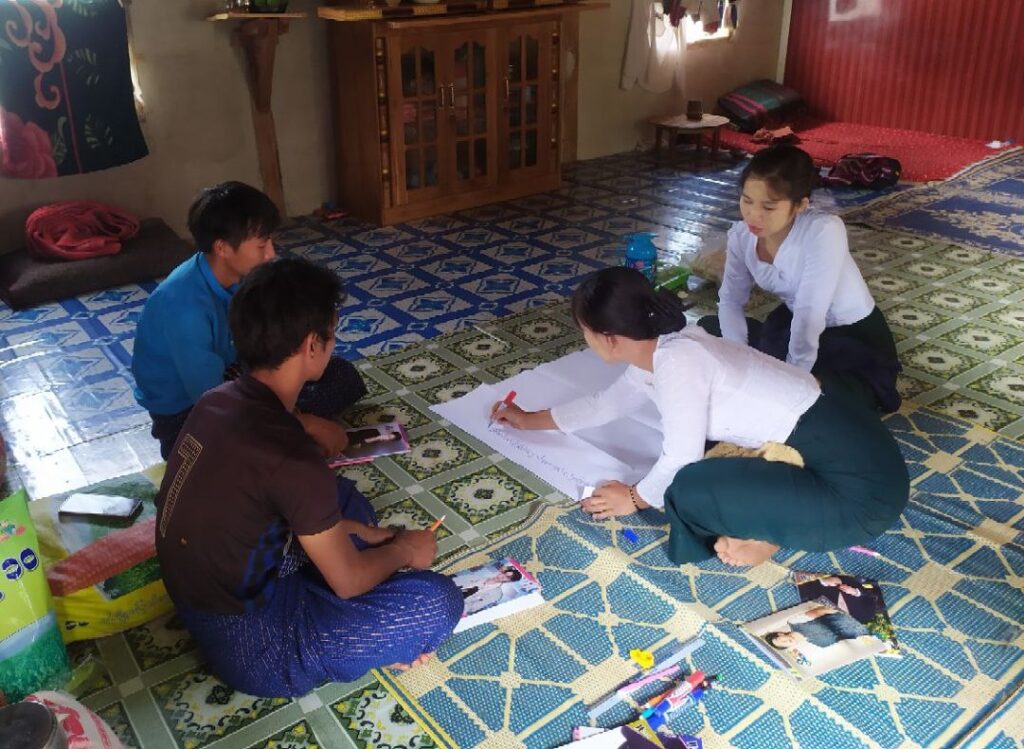
The results speak for themselves:
• Regular readers grew from 40 in 2023 to 67 in 2025.
• Children began reading regularly at home, borrowing books with excitement.
• Screen time dropped significantly.
• Group reading habits and respectful behavior developed naturally.
• Committee members became confident speakers, capable organizers, and even role models for the children.
• Parents became active supporters, sometimes borrowing books themselves.
What started as an uncertain experiment has become a vibrant community hub. The committee now dreams of building a dedicated library space, expanding its book collection, and organizing larger reading promotion events.
“We thought we were just opening a library,” one committee member said with a smile. “But we were really opening a door to hope.”
Han Phoe Pay’s library is more than a room with books; it is proof that when ordinary people are given trust, tools, and encouragement, they can transform their community. This is the heart of the Shanta Model.