
Before a single project begins, before a plan is written or funds are distributed, something more foundational takes place: people come together. When a new village begins its partnership, the elected Village Development Team (VDT) gathers for a very important training, not just to learn roles and responsibilities, but to experience what it truly means to work as a team.
These sessions are not lectures. They are active, playful, and intentional. Through simple games and shared reflection, participants begin to see themselves not just as individuals, but as part of something larger, a group capable of shaping their village’s future. Trust is built. Voices begin to emerge. And leadership starts to take root in a way that is both personal and collective.
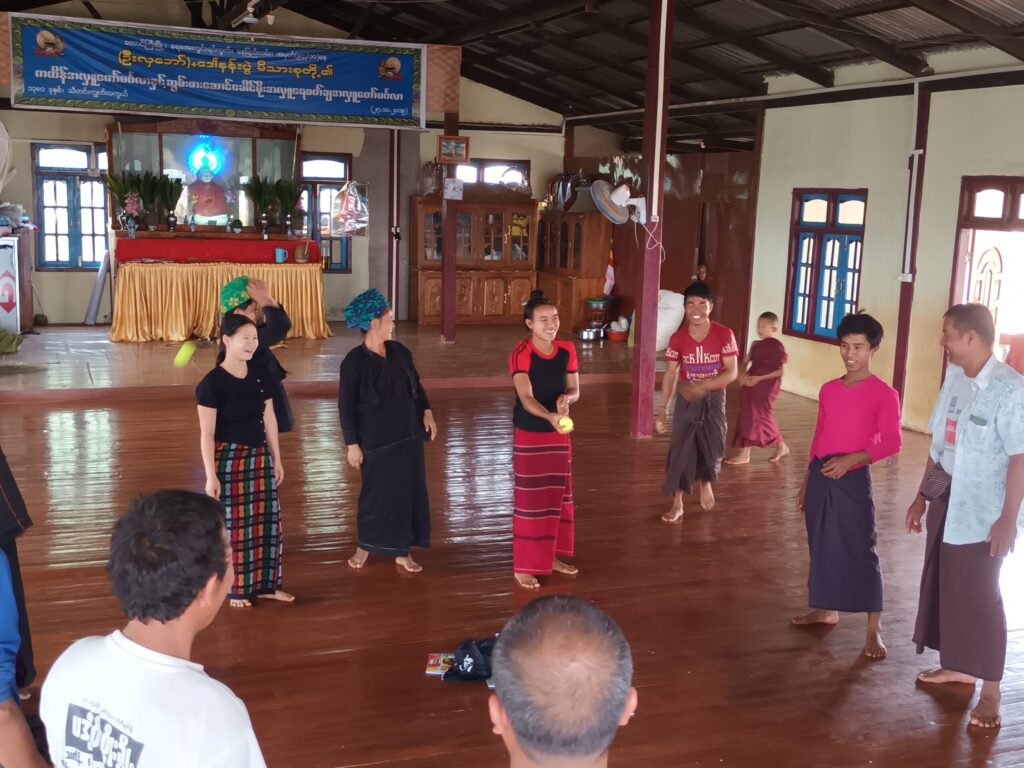
Ball Toss Circle: Learning Names, Building Connection
What it is:
Participants stand in a circle and toss a ball to one another. Each person introduces themselves—sharing about their family, work, and background, while remembering who they received the ball from and who they passed it to. As the activity progresses, more balls are added, increasing both energy and complexity.
What it builds:
This simple exercise quickly breaks down barriers. It helps participants learn about one another, builds memory and attentiveness, and introduces the idea that every person plays a role in a larger system. As the pace picks up, it reinforces coordination, trust, and the importance of staying connected to the group.
Understanding “Village”: Seeing the Whole Picture through Mapping
What it is:
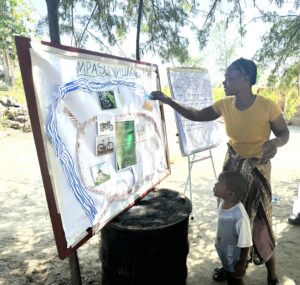
Through guided discussion and mapping, participants define what makes up their village, not just physical elements like homes, roads, and crops, but also relationships, leadership, and shared values. They explore what is visible and what is often unseen, including feelings like unity, care, and hope.
What it builds:
This activity expands the definition of community. It helps leaders recognize that development is not only about infrastructure, but also about people, relationships, and collective well-being. It lays the groundwork for more thoughtful, inclusive decision-making.
Role Play: What Does Development Really Look Like?
What it is:
Participants act out two contrasting scenarios: one where a problem is observed but ignored, and another where someone steps forward to involve others and take action. The group reflects on what they observed and identifies the steps of meaningful development.
What it builds:
This exercise brings abstract ideas to life. It shows that development begins with awareness, grows through shared responsibility, and succeeds through collective action. Participants begin to see themselves as active agents of change rather than passive observers.
Magic Pole Game: Experiencing Teamwork in Action
What it is:
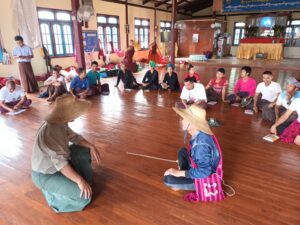
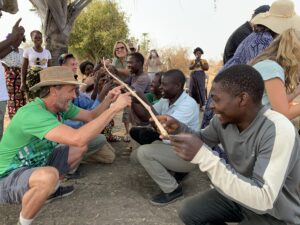
A hands-on group challenge where participants must work together to complete a physical task that requires coordination, communication, and patience. A group of people stands on both sides of a long, straight bamboo or other material pole. The group needs to balance the pole on a straight finger (no holding!) and lower it to the ground, and everyone’s finger must stay under the pole for the entirety until the pole lies flat on the ground. Sounds easy, but it isn’t!
What it builds:
This activity highlights the qualities of an effective team: trust, respect, effort, and shared responsibility. Participants experience firsthand how success depends on every individual contributing and staying aligned toward a common goal.
Participatory Leadership Role Play: Listening vs. Deciding Alone
What it is:
Two leadership styles are acted out: one where a leader makes decisions without consulting others, and another where the leader listens, invites ideas, and encourages community participation.
What it builds:
The contrast is powerful. Participants clearly see how inclusive leadership builds trust, ownership, and stronger outcomes. It reinforces that true leadership is not about authority, but about engaging others in meaningful ways.
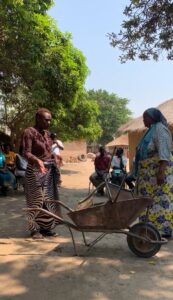
By the end of the day, something has shifted. What began as a group of individuals chosen to represent their village becomes a team—one that understands its purpose, values participation, and is ready to lead together.
These early moments matter. They set the tone for the entire partnership ahead. Because long-term change doesn’t start with projects, it starts with people who believe in their ability to create it, together.