
While I am always enthusiastic about Shanta’s work, I get truly enthused when I think about Shanta’s future. On the cusp of expansion with a blueprint of the Village Partnership Model (VPM) in the works, we are poised to take our next step as a thought leader and influencer in the development space. More importantly, by expanding, we can help more people and further test/refine our model. While expansion should provide additional proof of concept, it will also test our model in a vastly different context. I believe we will exceed expectations in our pilot villages while also learning a great deal that will allow us to continue enhancing the model.
Why am I so confident? While the data shows that the VPM has been incredibly successful in Myanmar, that doesn’t necessarily mean it will work elsewhere, right? For example, cultural and economic differences could be significant obstacles to successful implementation in a new country.
Fortunately, we have a solution to this risk built into the model itself.
Community-led Development
Because our model is community-led, the voices, choices, and power of local people are centered and amplified by participation in Shanta’s VPM. We do not dictate what projects are chosen and executed; the villagers do! A “community-led” approach guarantees contextualization of the model because the villagers (not outsiders or a predetermined Shanta agenda) will determine the development priorities for each village.
As a staff, we fully expect the VPM to look somewhat different in another country. Thanks to our community-led approach, the needs, priorities, and folkways of our future village partners will have ample space for expression due to the nature of the model itself. In fact, for the expansion to be successful, we must hold space for local people to integrate/adapt our model into their way of doing things. This tension of staying true to our guiding principles while also making space for local people to adaptively lead the work should yield real insights into how we might continue our expansion down the road. Will there be different versions of the model for different regions of the world? Will we be shocked to find that the Myanmar-developed version of the model is largely embraced in other locales? Will the adaptations be minor or extensive?
I don’t know the answer to these questions, but I am eager to find out.
Along the way, I feel confident we will learn much to enhance the model while also helping more people. Thank you for being with us on the journey! We are at an exhilarating inflection point, a place we would never have gotten to without your support.
I look forward to sharing the details of our expansion plan with you at our fall fundraiser. If you cannot attend, no worries. Currently, we plan to record the presentation and share it by email. Given the additional challenge of the COVID Delta Variant, all of these plans are subject to change, but we will certainly keep you updated!
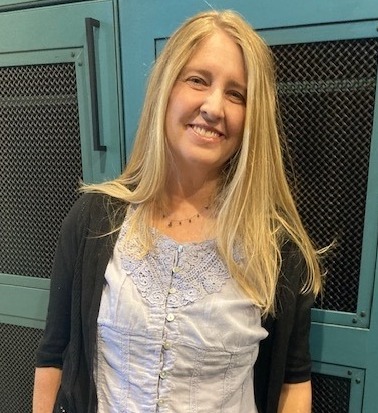
Please welcome our newest addition to the Shanta family- Sally Shuffield is a graduate of Vanderbilt University (like me) and has spent most of her career in the nonprofit sector. She was formerly the Development Director of Western Resource Advocates, a regional environmental advocacy organization based in Boulder, CO, and from 2007 to 2017 was the Executive Director of Durango Nature Studies (DNS), an environmental education organization and nature center in Durango, CO. Sally will be taking the Development Manager role with Shanta. Feel free to reach out to her with any questions at sally@shantavillagepartners.org. Mingalaba (welcome) Sally!