
Any development program can look good while the support is still flowing. The real question is what happens after the partners pack up and go home.
In Htee Phoo and Htee War Mhu, two villages in Myanmar, we now have an answer. And it smells a lot like coffee.
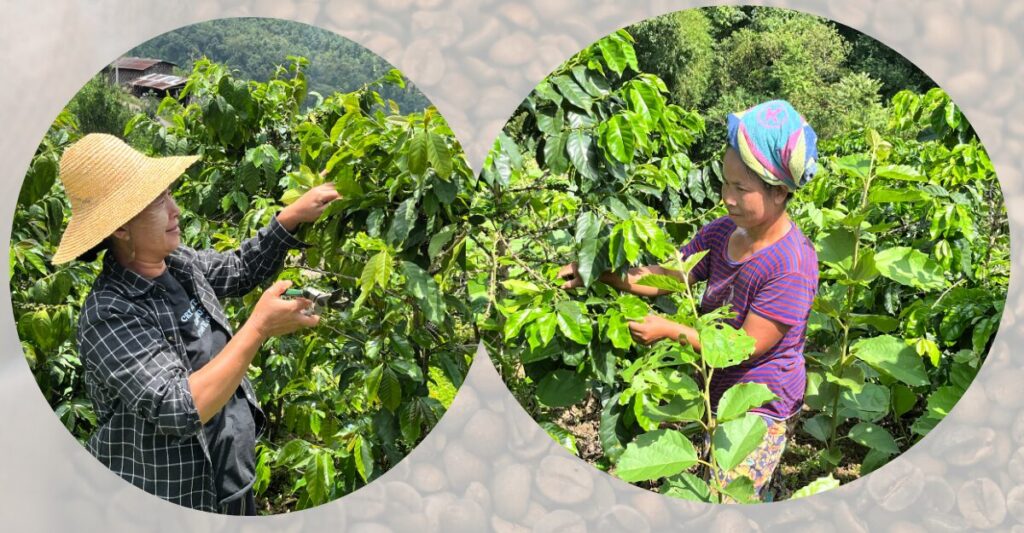
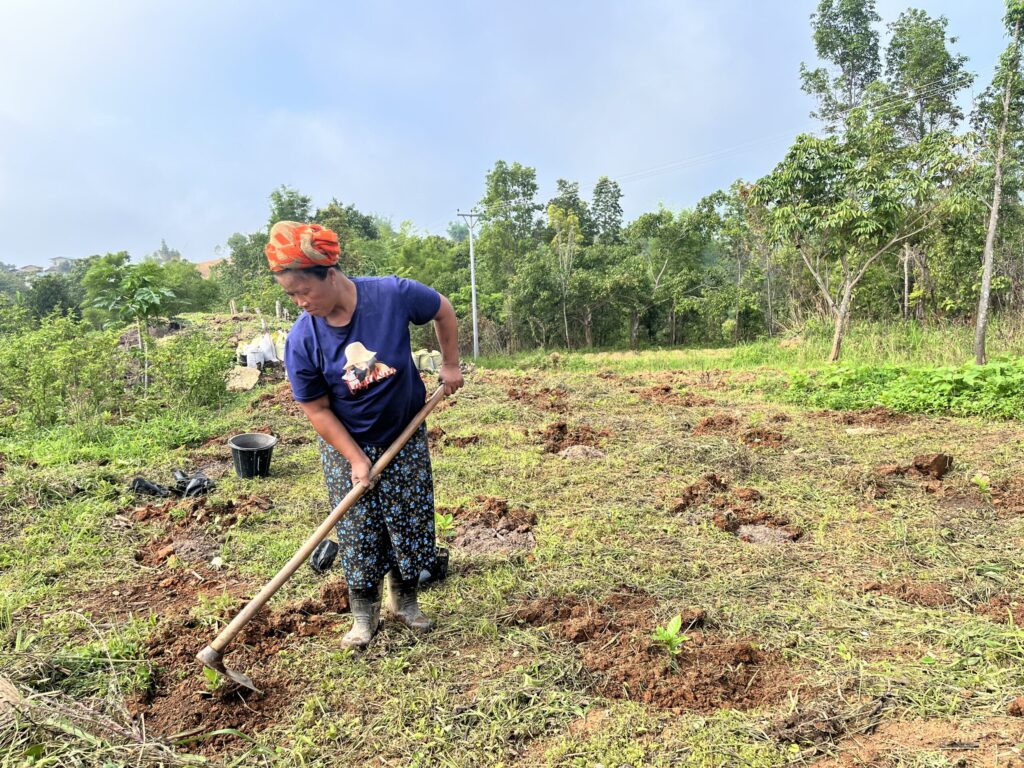
Both villages graduated from Shanta’s six-year Village Partnership two years ago. During a recent field visit, our staff walked through hillsides that had changed since they last saw them. Coffee trees planted five years ago are now heavy with fruit. Farmers are clearing previously unused land to plant more. Families are pruning, shading, and managing their trees with a confidence that wasn’t there before.
Nobody told them to do any of this. They’re doing it because it works.
From the 2025 harvest alone, the four farmers our team visited each earned between $1,026 and $1,795. For families in rural Myanmar, that is life-changing money. And every one of them told us the trees were still producing.
Nang Mu did the math. In Htee Phoo, many families grow thanapet, a leaf used to wrap traditional cheroots. Nang Mu compared the two crops and the choice was easy.
“Growing thanapet requires spending money on firewood, the work is labor-intensive, it is difficult to find workers, and the returns are low. From coffee, I earned the equivalent of $1,026 and there is still another harvest to come. Only my family harvests the coffee, so there are virtually no additional labor costs. When you compare the two, coffee is a much better investment.”
Nang Yoon found a safety net. When pig prices dropped, her family could have been in real trouble. Coffee carried them through.
“I earned the equivalent of $1,103 from selling coffee. The trees are still producing. Since pig prices have fallen, the income from coffee has covered my family’s living expenses. My next priority is to establish more shade for the coffee trees.”
Notice that last line. She isn’t waiting for someone to tell her what comes next. She already has a plan.
Nang Tote had her best season ever. Better tree care meant her trees flowered more often, and more flowers mean more coffee cherries.
“This year my income is much higher than in previous years. In the past, my coffee trees flowered only about three times each season, but this year they flowered four or five times, resulting in a much better harvest and higher income. The trees are still producing fruit.”
Nang Nwe proved what good technique can do. In Htee War Mhu, where farmers have widely adopted pruning, Nang Nwe earned the highest income of anyone we visited: the equivalent of $1,795. Her secret is simple.
“Pruning unnecessary branches and excess leaves helps the trees grow stronger, produce more fruit, and generate higher income.”
It’s the kind of practical knowledge that, once learned, never leaves. It gets passed from farmer to farmer, field to field.
The most encouraging thing our team saw wasn’t on a coffee branch. It was in the nurseries.
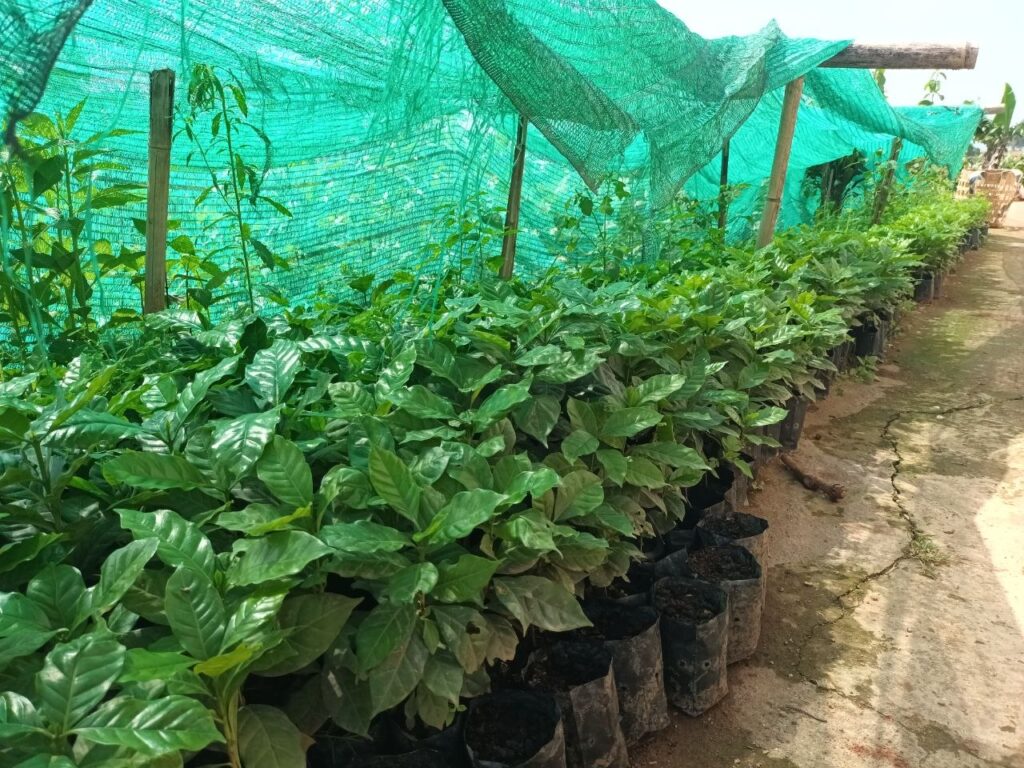
During the partnership, farmers learned how to select quality seeds and raise healthy seedlings using local resources. Today, they run their own coffee nurseries. Many no longer need to buy plants from outside the village at all.
Better still, they’re growing more seedlings than they need, and selling the extra. What started as a way to plant their own farms has become a second source of income. That is what a self-sustaining system looks like.
Coffee is a patient crop. A tree planted today won’t pay off for years. That’s exactly why these results matter so much. The seeds of this success were planted during the partnership, through training, investment, and trust in the communities to lead. But the harvest is happening now, on the villages’ own terms. Farmers are expanding their land, refining their methods, and making confident decisions about their families’ futures, with no one looking over their shoulder.
This is exactly what community-led development strives to achieve: lasting impact that continues well after Shanta’s support ends. Not change that depends on us, but change that keeps growing long after we’ve stepped back.
The partnership was never meant to last forever. It was meant to leave villages stronger, more skilled, and fully in charge of their own futures. In Htee Phoo and Htee War Mhu, every coffee harvest is proof that it did.