

In Ham Phoe Pay Village, 36-year-old Khun Soe Myint has farmed to support his family his whole life. He grows corn, paddy rice, groundnuts, and garlic, the same mix that sustains most smallholder farmers in Southern Shan State.
Soybeans were once part of that life too. As a boy, he planted them alongside his parents after the rice harvest, sowing rows by hand. When prices fell, he let the crop go.
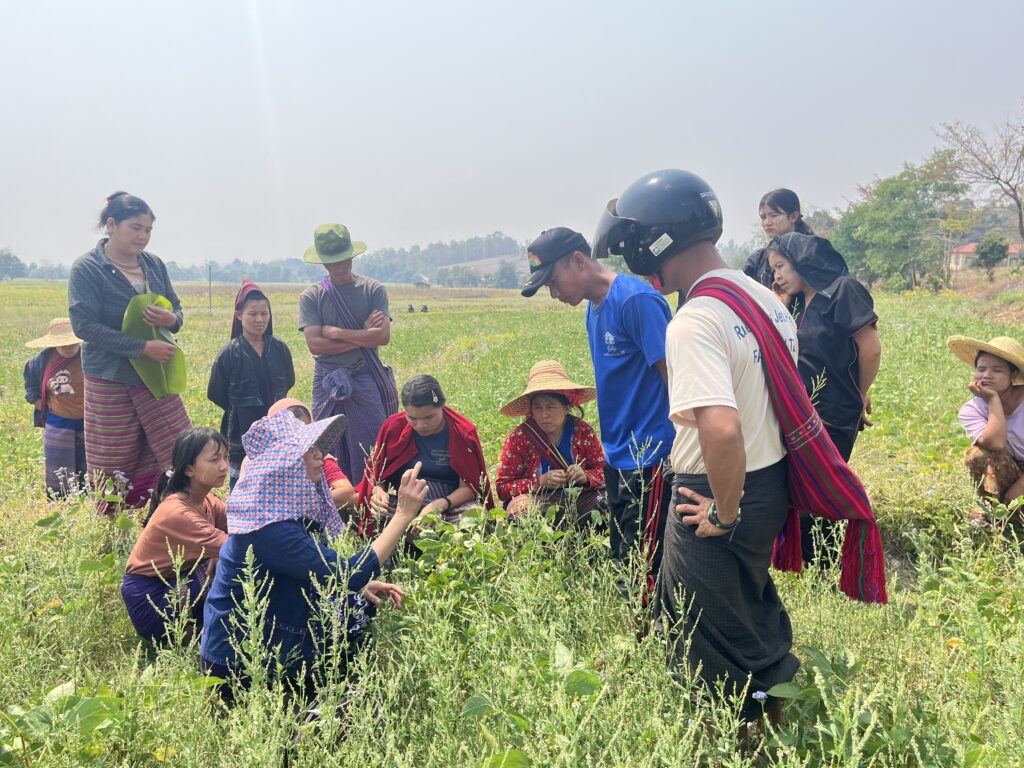
In January 2025, that changed. Khun Soe Myint joined Shanta’s Livelihood & Farmer Resilience Program and received training in improved soybean cultivation and agricultural record-keeping. He treated it as an experiment, planting across three seasons and three different land types. Despite storms during harvest and uneven soil fertility, he produced approximately 685 kilograms, selling most of it and setting aside 33 kilograms as seed for the next season.
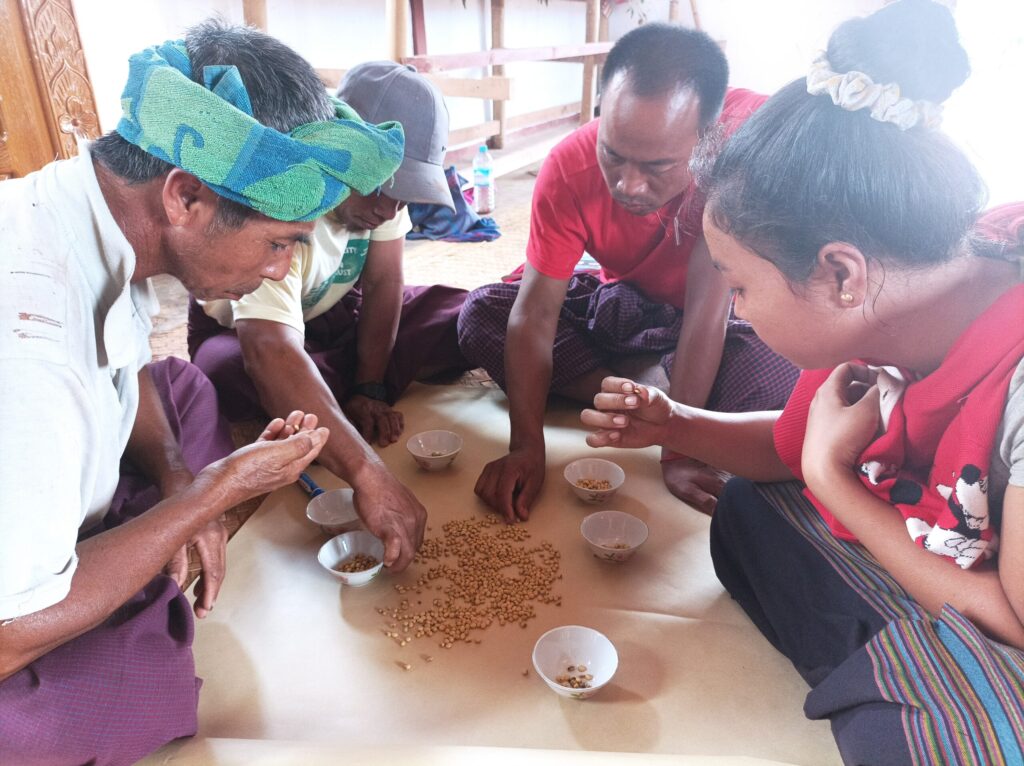
The numbers told a clear story. His production costs came to around $231 USD. Sales brought in over $495 USD, for a net profit of more than $256 USD. Beyond the income, it reduced his family’s dependence on agricultural loans.
Record-keeping revealed something else: soybeans require roughly half the input costs of corn while generating far higher returns. Corn runs about $256 USD per acre and yields around $333 USD. Soybeans cost roughly $128 USD per acre but can generate nearly $487 USD. He also found that row planting produces stronger plants and higher yields than broadcasting, while cutting seed use by about 8 kilograms per acre.
These insights reshaped his plans. He now intends to expand soybean cultivation to nine acres and rent an additional 2.5 acres. He has also invested in a seed-threshing machine, scaling his own operation while offering threshing services to neighboring farmers, creating a new income stream and helping address local labor shortages.
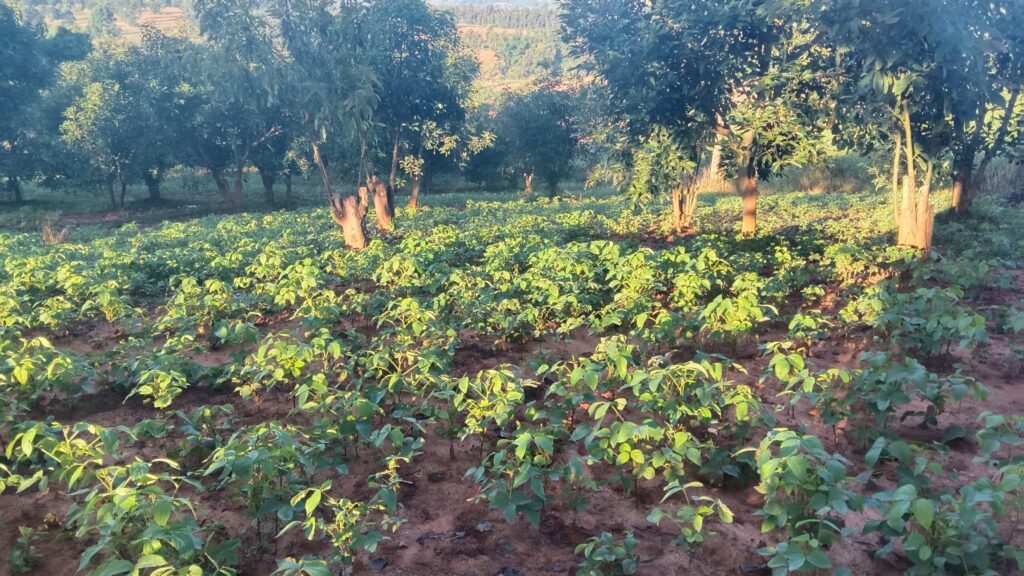
What began as a small experiment is now a strategic, data-driven decision grounded in knowledge and confidence. For Khun Soe Myint, the transformation happened not just in the field, but in how he makes decisions.