
Words carry weight. The names we choose for the work we do reveal something essential about what we believe and why we show up. At Shanta Village Partners, our name and the name of our partner organization in Myanmar aren’t just labels. They are a philosophy.
Shanta is a conjunction of Burmese and Hindi words meaning abundance, peace, and serenity, a vision of communities thriving not just in material terms, but in wholeness.
Muditar is a Burmese word meaning empathetic joyfulness, the particular quality of feeling joy because of the joy of others. To embody muditar is to be genuinely delighted by someone else’s flourishing.
Together, these names describe the full arc of the work: Shanta holds the horizon while muditar embodies the spirit in which we walk toward it.
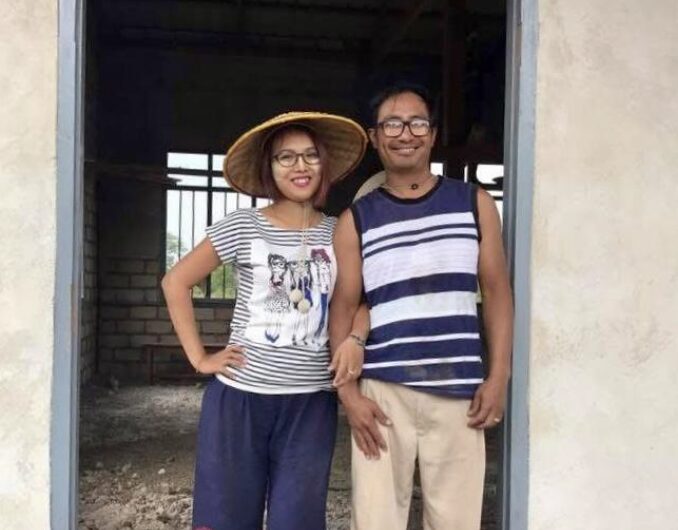
In 2008, Shanta launched its first mobile health clinic in Myanmar, hiring Khaing Zar Oo (Khai, our Global Program Manager) as a translator. Her passion for development work quickly became apparent, and she soon stepped into the role of medical officer. Alongside Thar Nge, Khai co-founded what would become the Muditar Foundation, giving Shanta’s work in Myanmar a local identity and a local home.
But building an organization in Myanmar was not straightforward. The political environment for civil society organizations was deeply restrictive, and foreign-linked groups were closely monitored. Around 2010, government authorities summoned Khai to a state-level meeting with a clear instruction: stop conducting activities under the Shanta name.
Rather than shutting down the work, Khai and the team made a different choice. They formally registered Muditar as a local Myanmar organization, one that could operate legally, protect local staff, and maintain community trust. Muditar was not a separate organization from Shanta in mission or purpose. It became Shanta’s local identity and operational structure inside Myanmar.
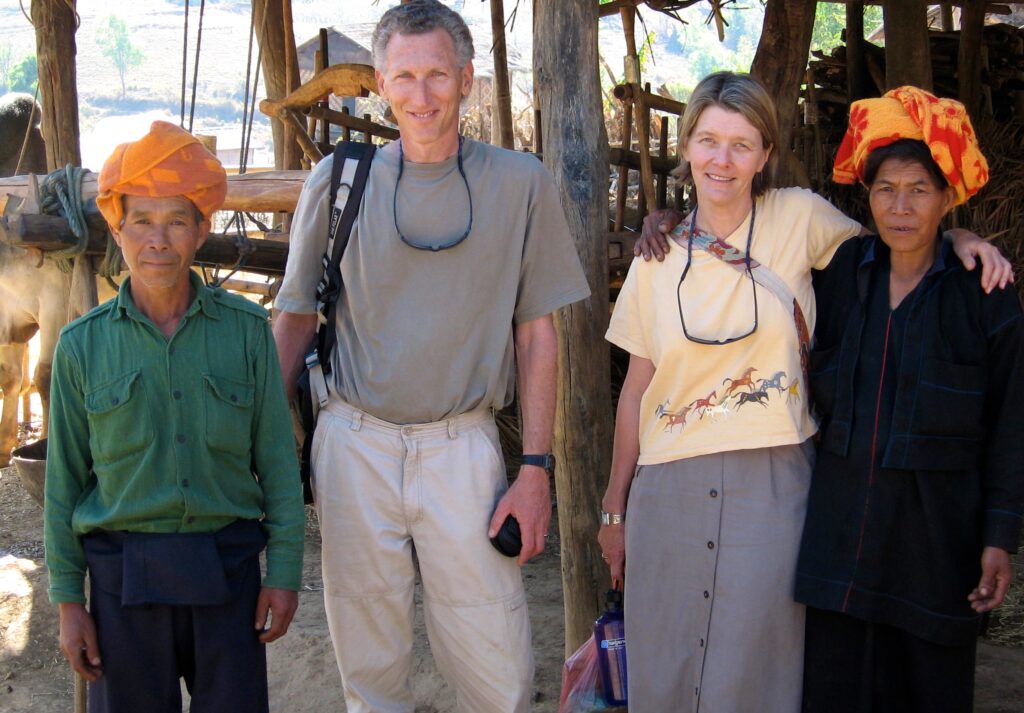
That decision reflects something central to how Shanta understands community development. Lasting change requires local ownership, rooted leadership, and the flexibility that only comes from truly belonging to a place. Over the years that followed, Muditar grew, establishing new village partnerships and expanding programs in women’s leadership, health, livelihoods, and village governance. Thar Nge and Khai continued to lead, while Mike and Tricia supported the work from Colorado, visiting regularly alongside the team.
Muditar became the Myanmar foundation of Shanta’s work, not a branch office, but a genuine expression of the same mission in local terms.
There is something quietly profound about the fact that Muditar, born from a moment of restriction and risk, carries a name that means empathetic joyfulness. It speaks to a way of working that refuses to be diminished by hardship, a commitment to what the work is ultimately for.
In 2023, that same confidence carried Shanta to a new continent. The success of the community-led model in Myanmar, built over years alongside Muditar, rooted in local ownership and the belief that communities can lead their own path forward, gave Shanta’s board and staff the foundation to expand into Zambia. In the Mazabuka district of Southern Province, a new chapter began, shaped by the same criteria that have guided Shanta from the start: genuine need, the right conditions for lasting partnership, and perhaps most importantly, people who carry in their hearts the conviction that change is possible from within. The names may be new. The spirit is the same.
Looking ahead, Shanta is exploring expansion into Central America, carrying forward a model built on a simple truth: that abundance, peace, and empathetic joyfulness are not gifts delivered from the outside, but things communities bring to the table from within.